
Every organization runs projects, but not every project delivers the expected results. Missed deadlines, unclear responsibilities, inconsistent reporting and unmanaged risks can affect even experienced teams. Often, the problem is not a lack of effort. The team simply lacks a shared way to plan, manage and monitor work.
A Project Management Office (PMO) helps address these challenges by establishing clear standards for project delivery. When applied well, these standards give teams a common approach, improve accountability and help leadership make informed decisions.
What Are PMO Standards?
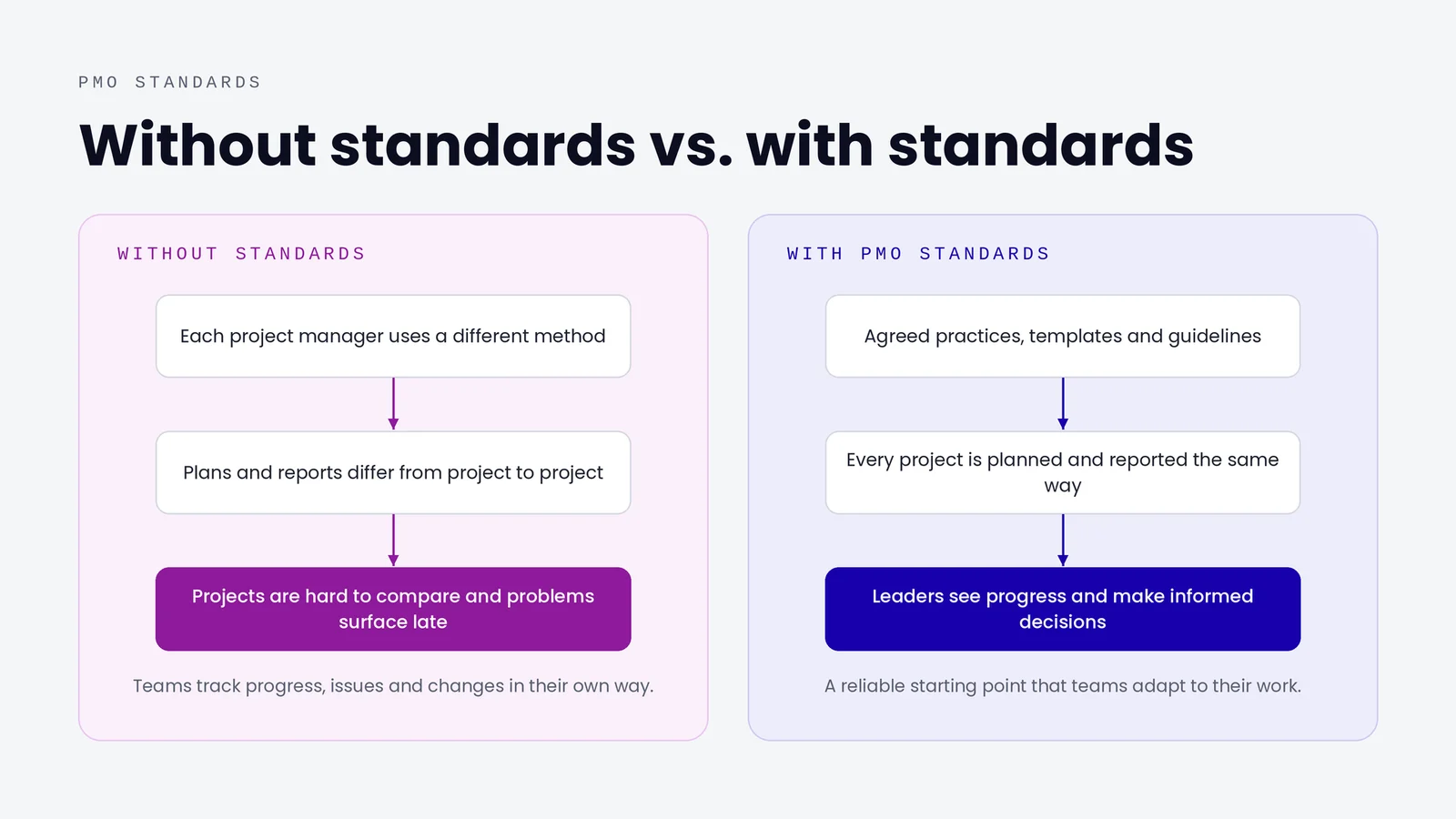
PMO standards are agreed practices, processes, templates and guidelines that define how projects should be managed across an organization. They set expectations for planning, approvals, progress reporting, risk management and project closure.
Without common standards, each project manager may use different methods to track progress, report issues or manage changes. This makes it difficult to compare projects and identify problems early. Picture a steering committee reviewing three projects, each reported in a different format. Before it can discuss the projects, it has to decode the formats.
Standards do not require every project to follow the same process in every detail. They provide a reliable starting point that teams can adapt to the size, complexity and risk of their work.
Key Areas Every PMO Should Standardize
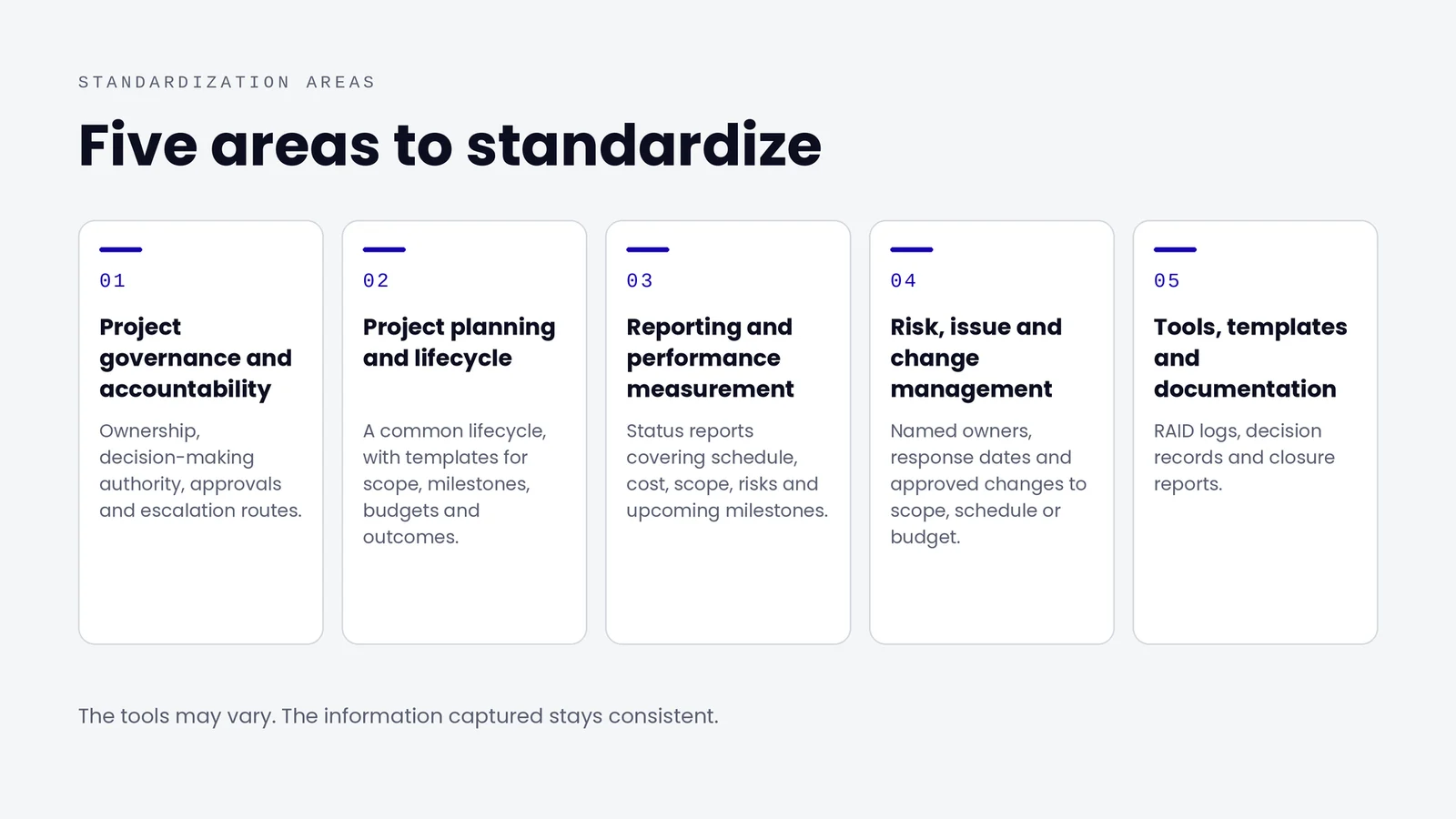
The five areas below answer the questions that project teams and leadership ask most often: who decides, what is the plan, how is the work going, what could go wrong, and where is the information kept?
1. Project Governance and Accountability
Every project needs clear ownership. PMO standards should define decision-making authority, approval requirements, escalation routes and the responsibilities of project managers, sponsors and stakeholders. When people understand their roles, decisions are less likely to stall and issues can reach the right person sooner. A decision log helps too, because it records who decided what, and when.
2. Project Planning and Lifecycle
A common project lifecycle helps teams understand what must happen at each stage, from initiation and planning to execution, monitoring and closure. Standard planning templates should cover scope, milestones, dependencies, resources, budgets and expected outcomes. These requirements help teams build realistic plans before work begins.
3. Reporting and Performance Measurement
Project reports should give decision-makers a clear picture of progress. Standard status reports can cover schedule, cost, scope, risks, issues, dependencies and upcoming milestones. Reporting in the same format makes it easier to compare projects, identify delays and decide where support is needed.
Reports should be useful rather than lengthy. A short, accurate update that highlights a decision or emerging problem is often more valuable than several pages of information that no one acts on.
4. Risk, Issue and Change Management
Projects rarely go exactly as planned. A defined process for recording risks, assigning owners, setting response dates and escalating unresolved issues helps teams respond before problems grow. Change control is equally important: proposed changes to scope, schedule or budget should be assessed and approved by the appropriate stakeholders.
5. Tools, Templates and Documentation
Standard templates reduce repeated effort and make project information easier to find. A PMO should establish practical guidance for project plans, RAID logs (risks, assumptions, issues and dependencies), decision records and closure reports. The tools may vary, but the information captured should stay the same.
How Standards Improve Business Results
The value of PMO standards goes beyond producing tidy documents. They help management see which projects are on track, where resources are stretched and which decisions need attention.
They also reduce avoidable administrative work. Project managers spend less time creating reports from scratch and more time resolving delivery issues. Teams can share lessons, transfer responsibilities more easily and maintain continuity when people change roles. A project manager who joins mid-project finds familiar templates rather than a new system to learn.
Most importantly, leadership gains a stronger basis for prioritizing investment. When project information follows a common structure, it becomes easier to compare progress against business objectives and direct resources toward the work that matters most.
Making PMO Standards Work in Practice
Standards only help when people use them. A PMO should involve project managers and business stakeholders when developing its processes, test templates with real projects and provide clear guidance on expectations.
Start with the areas causing the greatest difficulty, such as inconsistent reporting or unclear approval routes. Introduce improvements in manageable stages, collect feedback and remove steps that add effort without improving control or decision-making.
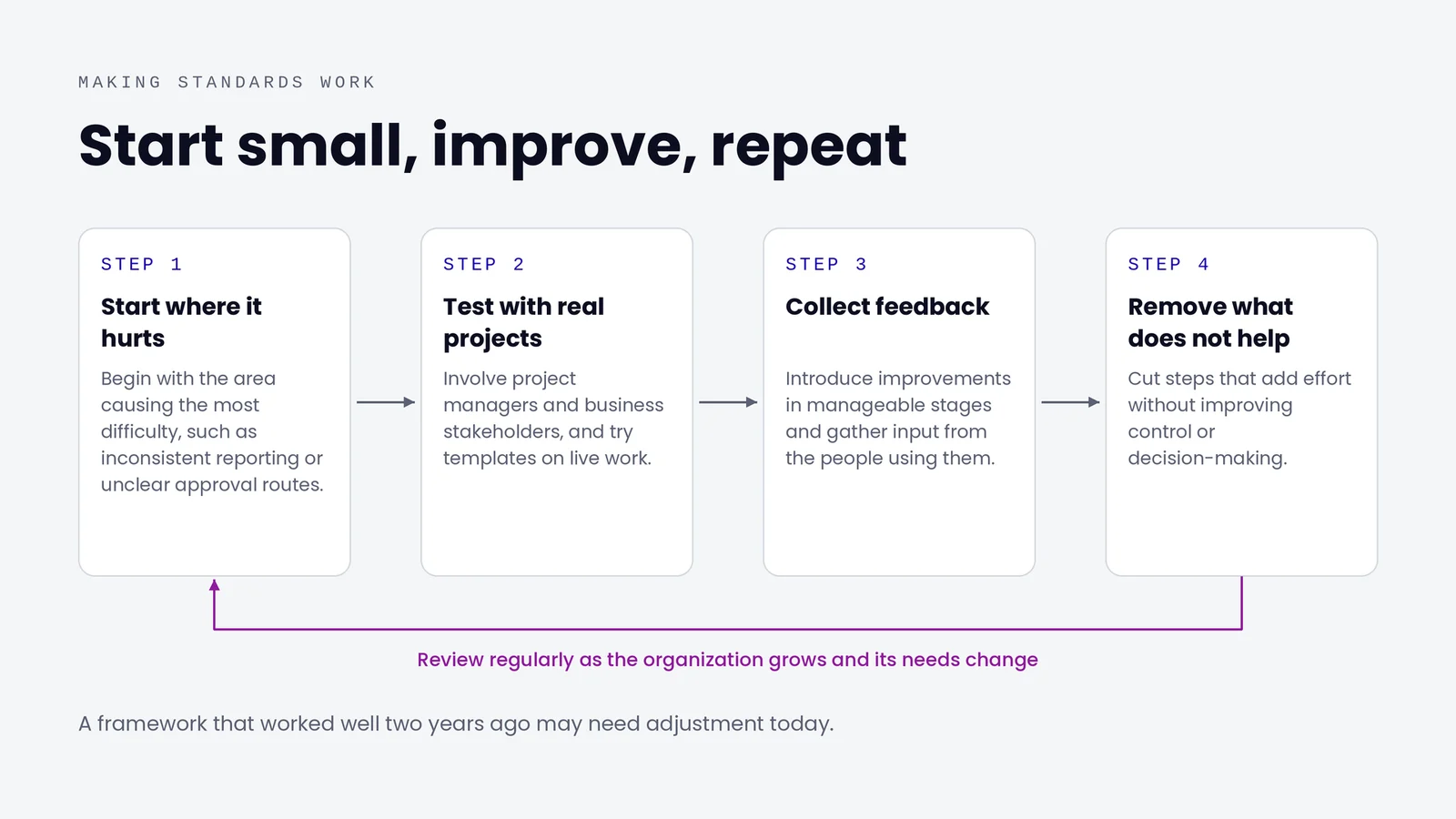
Standards should also be reviewed regularly. As the organization grows, its delivery methods, tools and reporting needs will change. A framework that worked well two years ago may need adjustment today. Ownership matters here too. Name someone in the PMO who maintains each standard, so that updates do not depend on whoever happens to notice a problem.
Where to Start
Pick one project that is currently in progress and compare its plan, status report and risk log against the five areas above. The gaps usually show which standard to introduce first. Share the findings with the project manager and sponsor, agree one change, and review the result after a full reporting cycle.